 Concerts, festivals, film, and the culture around them.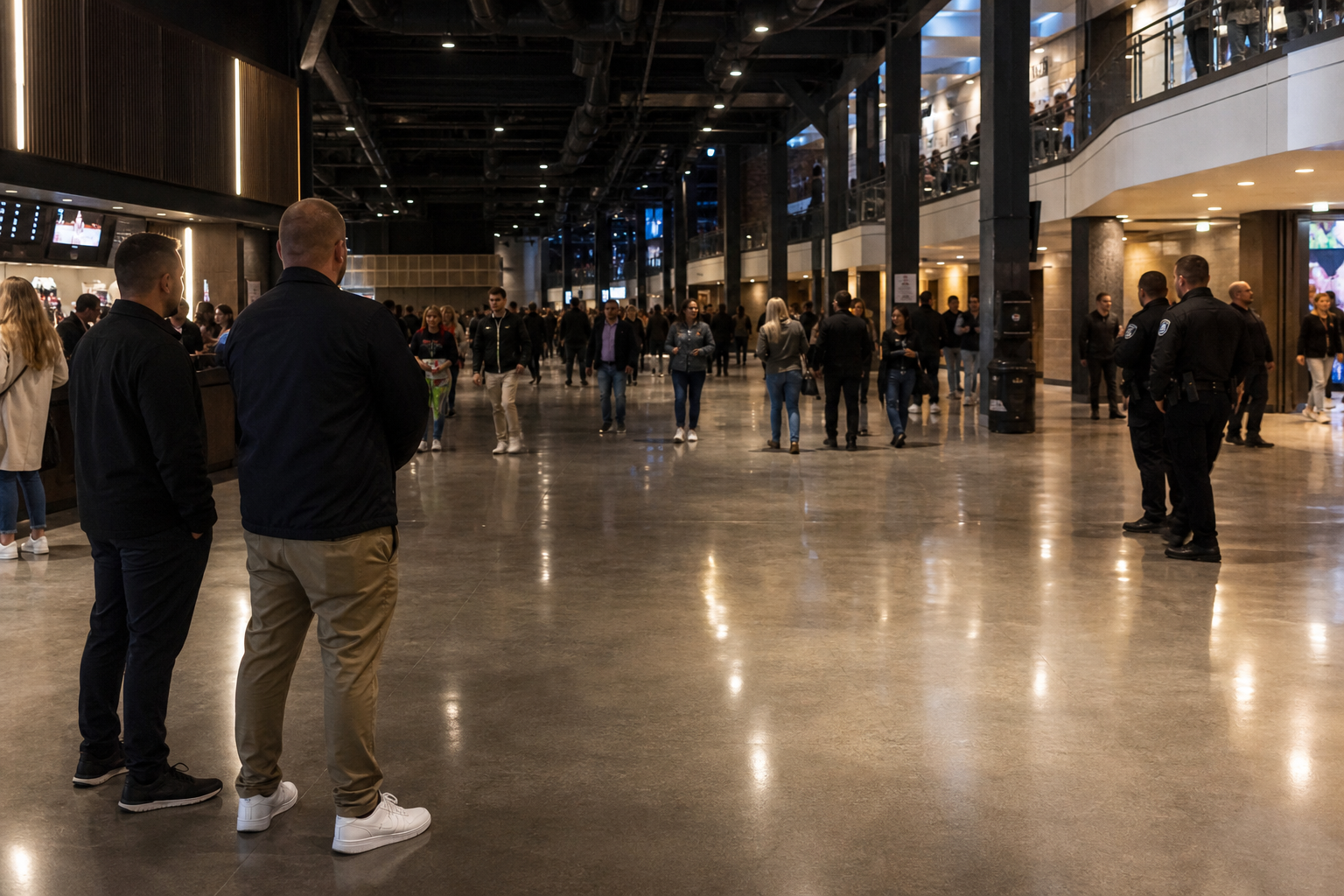
A concert feels safe when fans can tell that someone has thought through the night before they arrived. That feeling does not come from a wall of uniforms alone. It comes from clear lines, calm entry pacing, staff who can answer ordinary questions, and security teams who appear ready without appearing eager to escalate.
Over-policing usually announces itself through friction. Fans feel it when every movement is challenged, when rules are explained only after someone violates them, or when staff seem more interested in control than service. Effective event safety starts earlier, in the design of the guest journey.
Legibility lowers tension
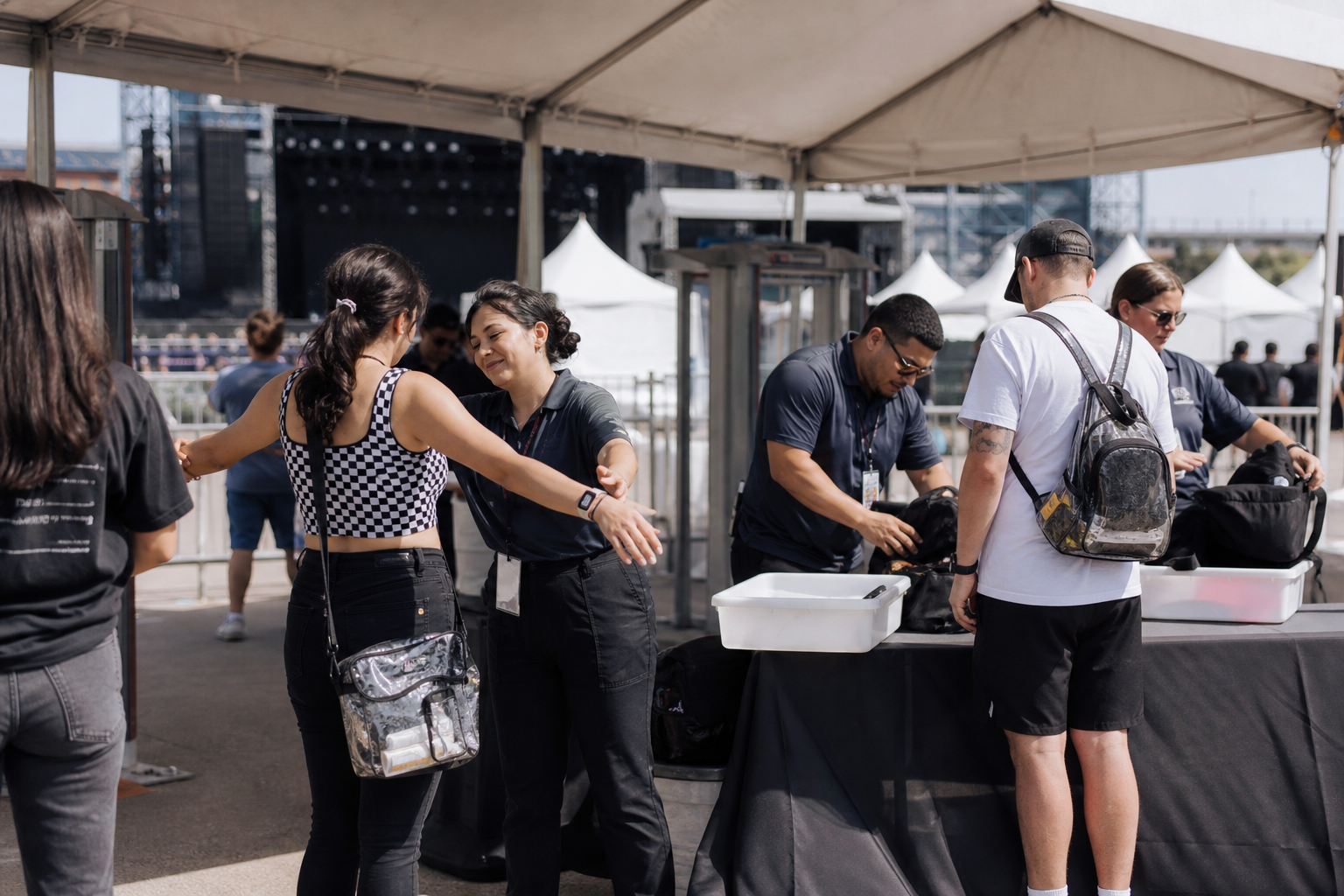
People tolerate screening, queues, bag checks, wristbands, and restricted areas when the reason is easy to understand. A venue that makes the process visible can reduce conflict before it begins. Directional staff, readable lane structure, and consistent policy language do more for confidence than a last-minute show of force.
Legibility also helps fans self-correct. If a patron can see where bags are checked, where medical support is located, and where the fastest exit path begins, the venue has converted a security plan into useful public information.
A safe-feeling venue does not hide security. It makes the right parts legible, calm, and proportional.
Proportional presence matters
Visible security has value, but volume is not the same as effectiveness. A proportional posture matches the event profile, the expected audience, the venue layout, and the emotional tone of the night. A family matinee, a high-demand club show, a festival headliner, and an awards arrival all need different choices.
The goal is to make help easy to find and misconduct harder to sustain without making ordinary fans feel like suspects. That distinction is subtle, but fans notice it immediately.
Hospitality is part of the safety plan
Guest services and security should not operate as separate worlds. At many events, the first person to notice a confused, overheated, intoxicated, frightened, or lost guest is not a security officer. It may be a ticket scanner, usher, bartender, merchandise worker, or volunteer.
When those teams know how to escalate concerns, the venue gains more eyes without creating a heavier public posture. Training, radio discipline, and clear handoff rules can turn hospitality staff into an early-warning layer.
The best plan is felt before it is seen
Fans should feel the effect of planning in small ways: the entry line keeps moving, restricted doors are not confusing, staff know where to send questions, egress routes are not blocked by merchandise queues, and medical help is not hidden behind production barriers.
When those basics work, fans often describe the event as smooth rather than secure. That is not a problem. Smooth is one of the most credible signs that security, operations, and guest experience have been designed together.